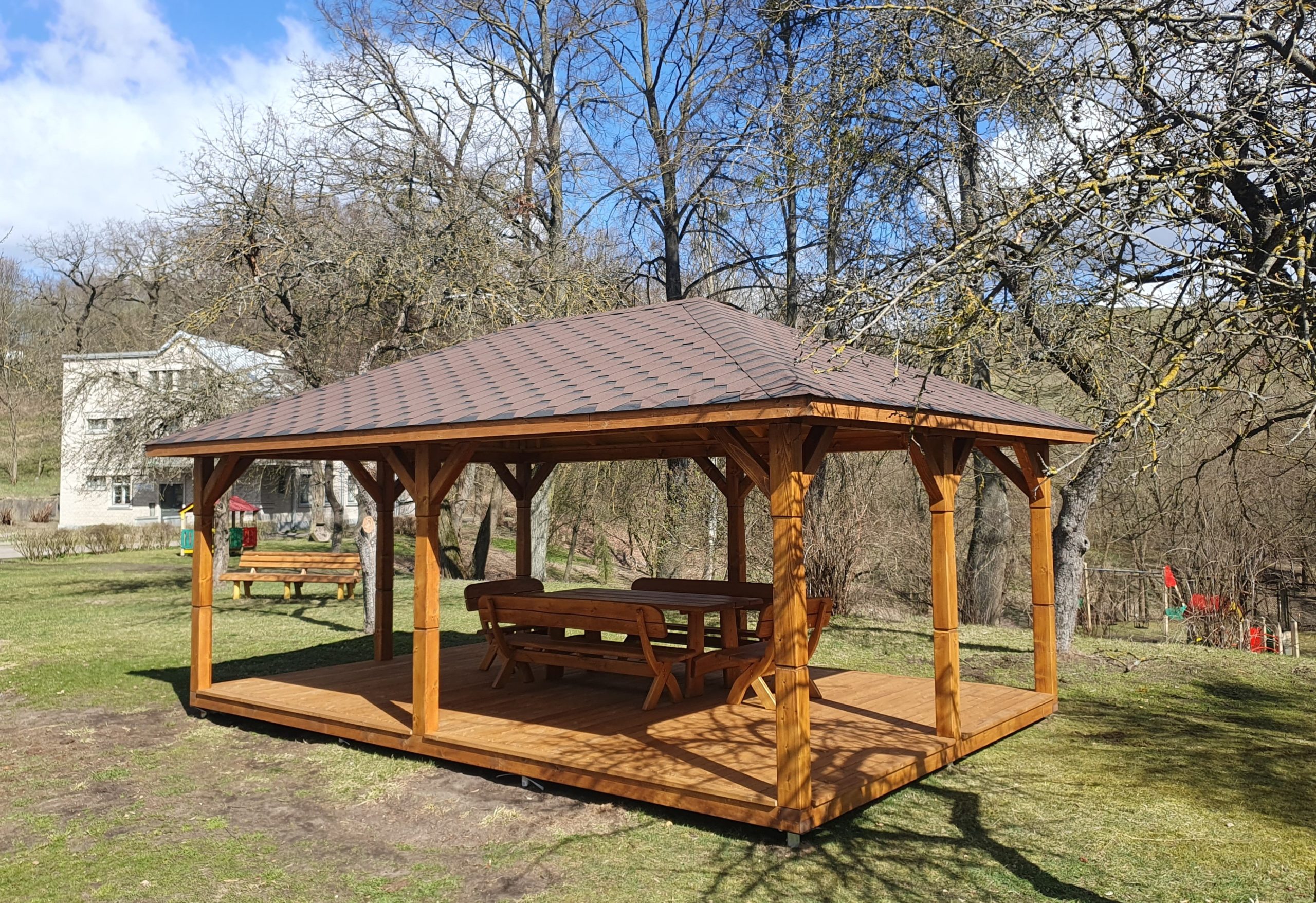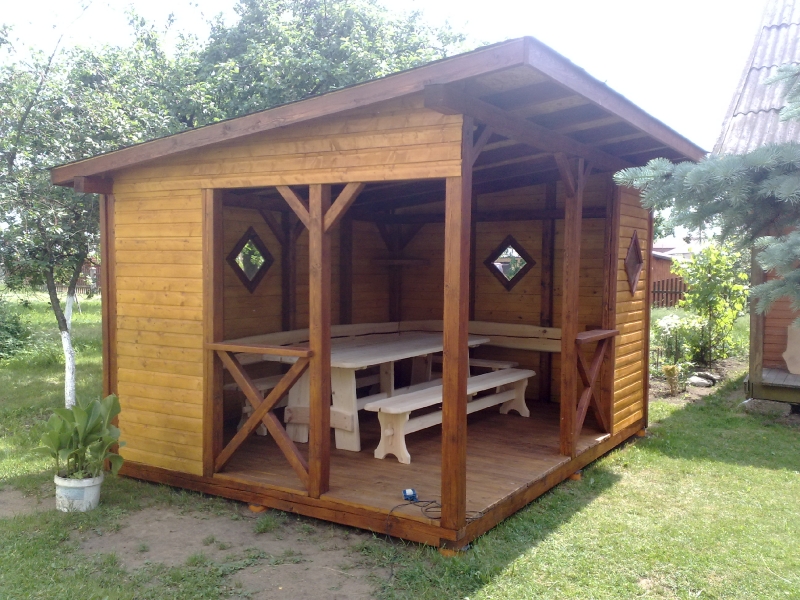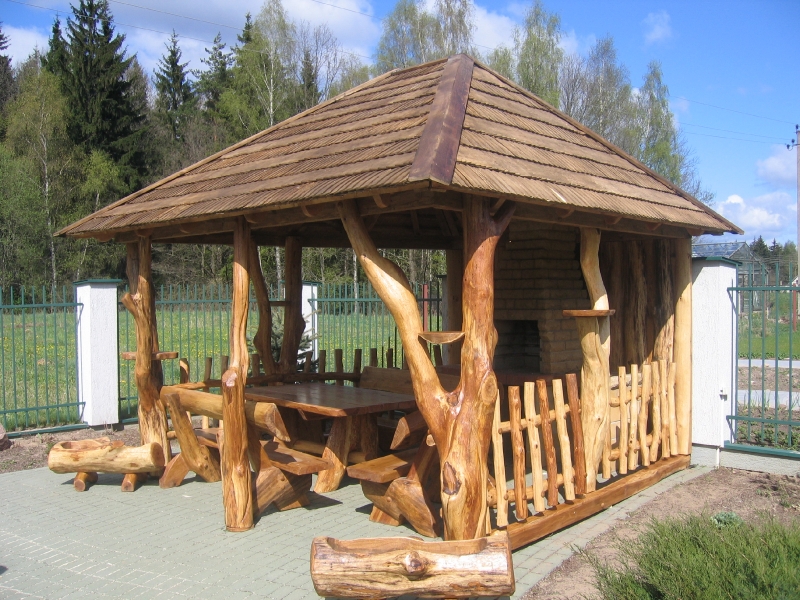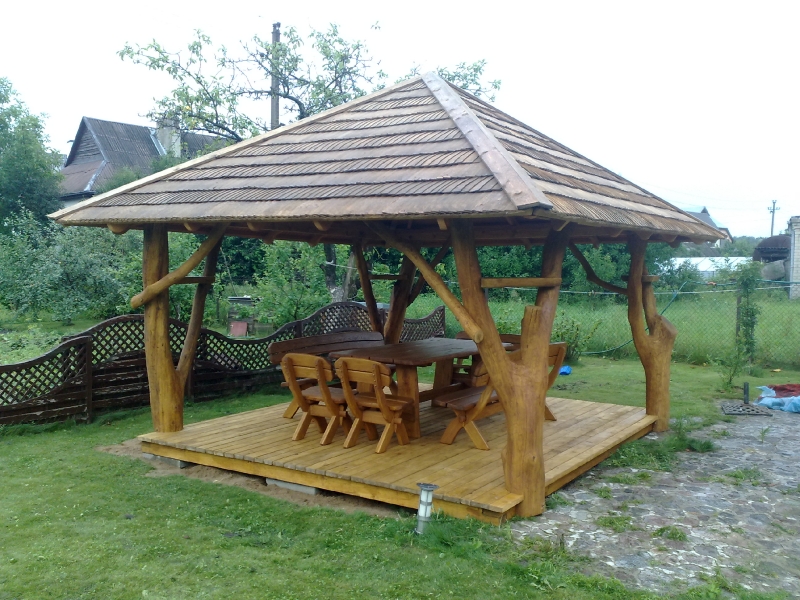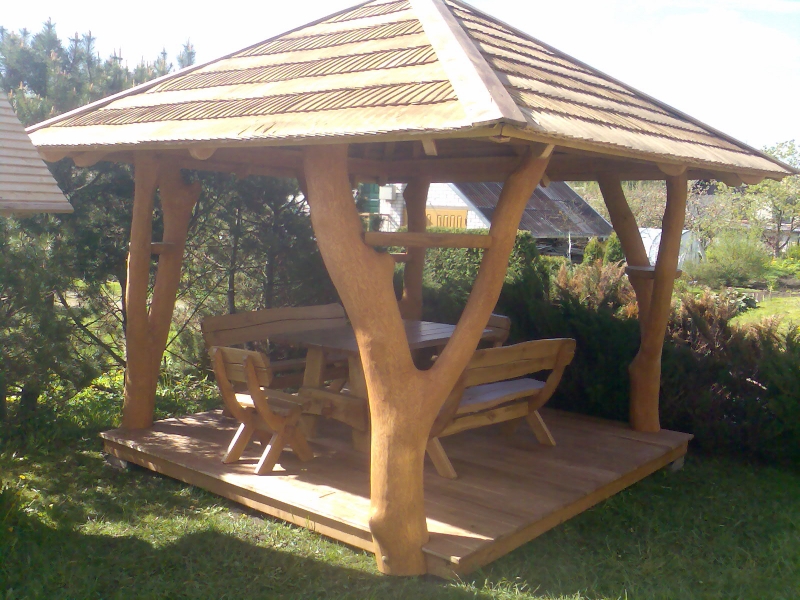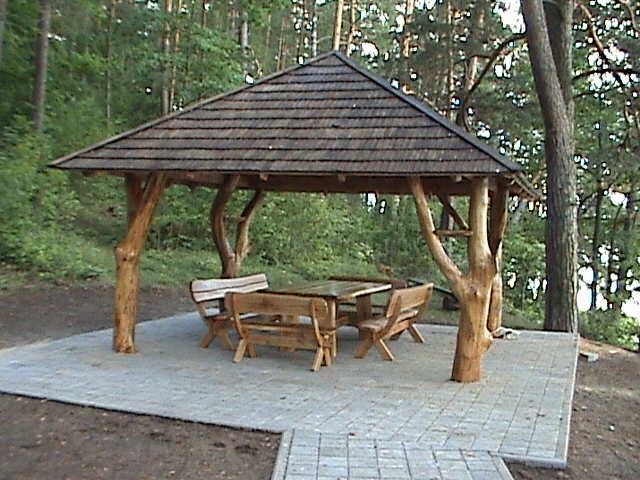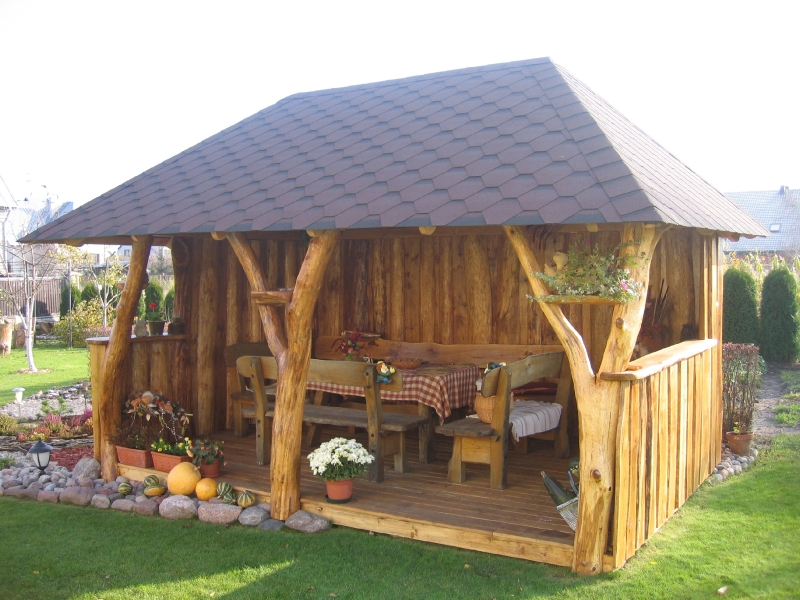
In short: Relaxation gazebo No. 15-2 is a spacious wooden gazebo with a hip roof covered with brown asphalt shingles. The back wall is built of vertical live-edge boards, a low board wall with a railing is built on the right, and the roof at the front is held up by Y-shaped trunks. In the photo the gazebo is cozily furnished and decorated with autumn flowers. The size, finishing and equipment are agreed individually.
A relaxation gazebo where you want to stay a while
This photo shows not only the gazebo itself but also how it lives. The autumn sun lights a table with a checkered tablecloth, cushions lie on the benches and chairs, pots of chrysanthemums stand on the floor, and pumpkins and ornamental gourds are set out by the entrance. The gazebo here is not just a roof over a table: it is a real outdoor living room in which people obviously enjoy spending time.
This kind of picture best shows what a relaxation gazebo is for. You do not only eat in it, you also rest: read, talk, drink tea and watch the garden. Comfortable benches with backrests, shelter from the wind and a wide roof let you spend whole hours here, even when it is already cool outside.
Autumn is a wonderful time for a gazebo. The sun still warms but no longer burns, the trees dress in colorful leaves, and the evenings grow longer. A gazebo with a closed back wall lets you enjoy this time longer, because it protects from the cool wind, and the roof from the autumn rain.
The photo shows how easily a gazebo can be adapted to the season. In spring it will be decorated by blooming flowers, in summer by pots of herbs, in autumn by pumpkins and chrysanthemums, and in winter it will become a shelter for garden furniture. The decor changes, while the gazebo itself stays the same: a dependable place to relax in the garden.
A brown tile roof with wide overhangs
The hip roof is covered with brown asphalt shingles whose pattern resembles hexagonal honeycombs. The roof is large and high and projects widely beyond the walls and trunks. The wide overhangs hold back slanting rain, and at summer midday they create a deep shade, so the gazebo is comfortable even in the greatest heat.
The brown color of the roof goes with the shade of the wood and with the colors of autumn nature. It is not bright, so the gazebo does not overpower the garden but blends naturally into it. Asphalt shingles are a light, easy-to-maintain covering: in spring and autumn it is enough to sweep off leaves and twigs and to inspect the roof edges after a strong wind.
Under the roof you can see round rafter ends laid out around the whole perimeter. They give the roof the traits of traditional wooden architecture and go with the natural trunks.
A big roof has another advantage for a relaxation gazebo: you can keep cushions, blankets or tablecloths under it even when it rains. If rain pours slantwise, the closed back wall and the wide overhangs keep water from reaching the benches, so you do not have to carry everything into the house each time.
A board wall and a low wall with a railing
The back wall of the gazebo is built of vertical live-edge boards. Each board keeps the outline of the tree trunk, so the seams between them undulate, and the wall looks alive and warm. It protects from the wind and creates a cozy backdrop for the table and benches.
On the right side there is a low wall of vertical boards, its top covered by a wide rail. It reaches about the shoulders of a seated person, so it holds back the side wind but leaves the view of the garden and the row of thujas behind the gazebo. You can put a cup or a small pot on the rail. A lower wall can also be seen on the left side, which makes the interior cozier and more enclosed.
This combination of walls, a tall back wall and low side ones, is the classic windbreak solution. It lets the gazebo stay open and bright but protected from the prevailing wind.
A live-edge board wall looks especially beautiful in autumn, when low sun falls inside. The light slides across the wavy edges of the boards, and the darker gaps create an impression of depth. In such light the gazebo looks even cozier, and the warm shades of the wood go with autumn nature.
Y-shaped trunks and their shelves
At the front the roof is held up by several natural-shape trunks. In the left corner stands a straighter trunk, and nearer the middle one that divides at the top and forms a silhouette resembling the letter Y, with a shelf fixed between the branches. On the right stands another forked trunk, and in the photo a basket of flowers has been set on its shelf. The trunks become not just a support but also a place for decorations.
All the trunks are peeled, sanded and coated with a warm honey-colored shade. They keep their natural bends, knots and branch stubs, so every gazebo is unique. The craftsmen choose the trunks from the wood available, looking for expressive shapes.
Inside stand a table, two benches with backrests and chairs. UAB “Laukbaldis” makes solid oak outdoor furniture, so the table, benches and chairs can be ordered together with the gazebo and their style matched. In the photo the benches have tall, slightly reclined backrests, so it is comfortable to sit on them longer, and the chairs let you flexibly change the number of seats when more guests arrive.
What the photo shows
The table helps you quickly assess the solutions used in this typical example.
| Feature | In the photo |
|---|---|
| Brown asphalt shingle roof | Yes, hip |
| Back wall of live-edge boards | Yes |
| Low wall with a railing | Yes, on the right |
| Y-shaped trunks with shelves | Yes |
| Table, benches with backrests, chairs | Yes |
| Wooden floor | Yes, raised |
| Surroundings | A garden, a stone border, a row of thujas |
How to furnish a relaxation gazebo
In the photo the gazebo stands in a well-kept garden. Field stones are laid around the edge of the floor, a garden lantern stands nearby, and further off you can see a row of thujas and flower beds. A setting like this shows how a gazebo can become the center of the garden, around which flower beds and paths are formed.
A stone border around the floor is more than decoration. It separates the lawn from the gazebo, so it is easier to mow close to it, and grass does not grow right at the wooden base. In addition, low plants feel good between the stones, softening the transition between the lawn and the gazebo. In the photo pumpkins and autumn flowers are laid out in this strip: a simple but very effective seasonal decoration.
A few tips for making a gazebo cozier for relaxing:
- choose benches with backrests: it is more comfortable to sit on them longer;
- take care of cushions and blankets for cooler evenings;
- lay a stone border around the floor or plant low flowers;
- put small pots or lanterns on the shelves of the trunks and on the railings;
- change the decor according to the season, and the gazebo will always look alive.
Looking after the wood is simple: once a year inspect the board walls, the trunks and the floor, and if the surface has turned pale or rough, renew the protective coating. Put pots on the floor on saucers so that water does not collect under them, and take down pumpkins and other autumn decorations after a few weeks, before they begin to rot on the wood. Small cracks as the wood dries are natural and usually do not harm the structure.
How to order relaxation gazebo No. 15-2
Laukbaldis shows only typical examples, so the size, layout of the walls, roofing and its color, trunks and finishing are agreed individually. Before calling, think about how many people will usually relax in the gazebo, which side the wind comes from and where you want an open view. If you plan flower beds or a stone border around the gazebo, as in the photo, it is worth thinking in advance about how much room will be left for them.
You will find similar solutions here: the gazebo with live-edge board walls and forked supports No. 15-1, the windbreak shelter with a shingle roof and a branch railing No. 15 and the yard gazebo with a brown tile roof No. 23-1. You will find all the works in the section wooden gazebos, and wooden planters in the section wooden planters and doors.
UAB “Laukbaldis” has worked since 1996 and, as the company states, was the first in Lithuania to start making this production. Call +370 687 25388 and quote No. 15-2: during the call you will discuss the size, the roof, the walls and the finishing.
Frequently asked questions
How does a relaxation gazebo differ from an ordinary one?
A relaxation gazebo is arranged so that it is comfortable to spend a long time in: with benches with backrests, shelter from the wind and a wide roof. It becomes an outdoor living room and not only a place to eat. The surroundings matter too: flowers, lanterns and cushions help create coziness.
Can I choose a roof of another color?
Yes, the type and color of the roofing are agreed individually. Brown goes with wood and nature, but you can also choose another shade, for example to match the roof of the house.
What is the low wall with a railing for?
It holds back the side wind but leaves the view of the garden. It is convenient to put a cup or a small pot on the railing, and when sitting on a bench you can lean on it.
Can pots of flowers be kept in the gazebo?
Yes, but it is worth putting them on saucers so that water does not collect under them. That way the wooden floor stays dry and beautiful longer, and no dark stains are left on it.
Is furniture ordered together with the gazebo?
Furniture is discussed separately, depending on the size of the gazebo. Laukbaldis makes solid oak outdoor furniture, so the table, benches and chairs can be ordered together.
How do I order relaxation gazebo No. 15-2?
Call us and quote No. 15-2. Together you will discuss the size, the walls, the roofing and the finishing, and, if needed, the furniture for relaxing.